
 WSET® Certification
  Choice of classroom and/or online
  Personalised approach
  LifeLong Learning
  Also in your company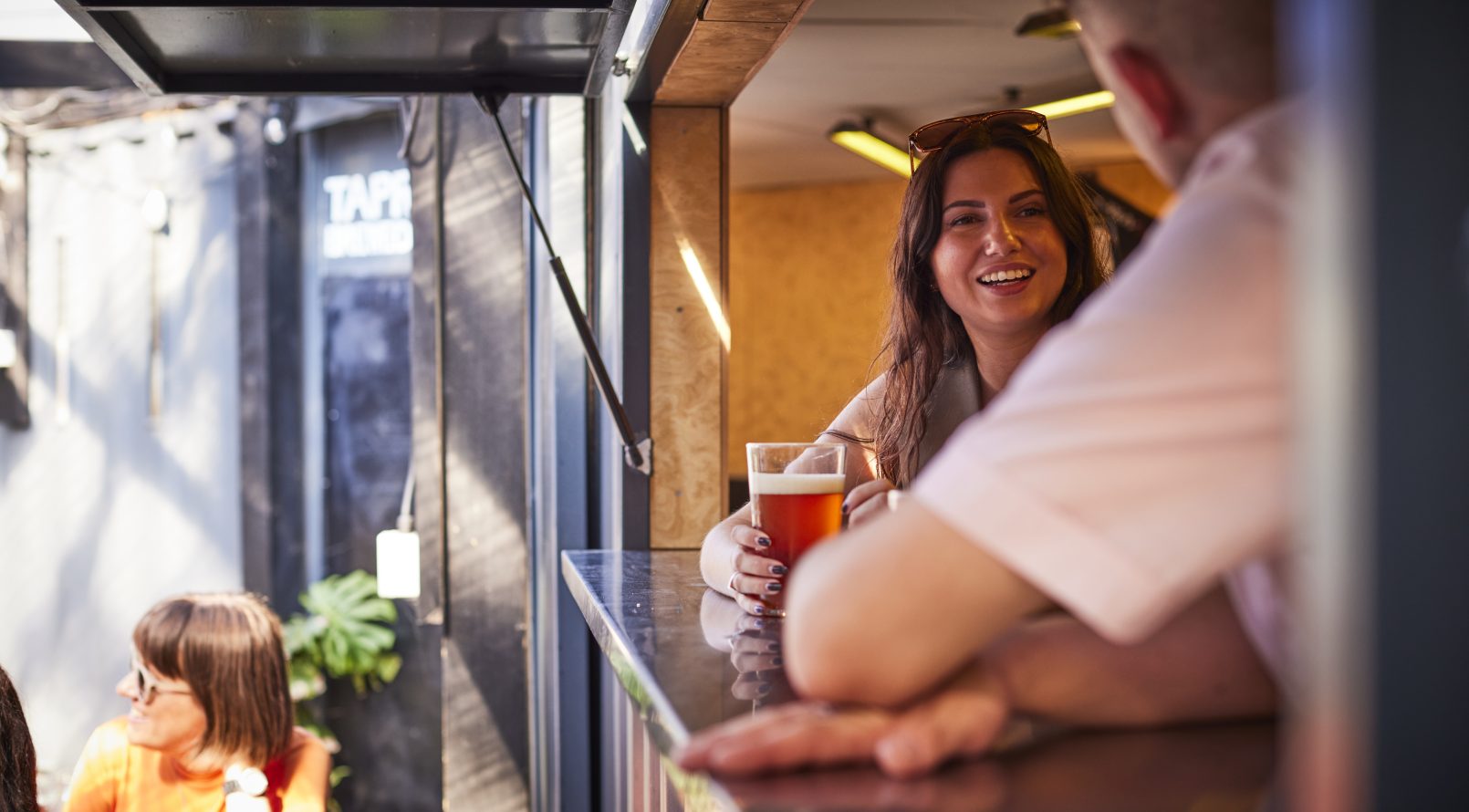
Beer as a birthright, knowledge as a blind spot.
You like beer. Otherwise, you wouldn’t be reading this—safe to assume 😁.
But let us ask you, straight up: what actually is beer? “My favourite drink.” Lovely answer. We’ll happily take that. But could you define it?
If you were to say, off the cuff, “an alcoholic drink made from grain, water, sugar and hops,” we’d already call that a solid attempt—better, in fact, than most dictionary entries, and clearer than what you’ll find cobbled together online. As for the Royal Decree of 31 March 1993, we’ll tactfully leave that aside.
We had a go ourselves: “Beer is a unique drink. A thirst-quencher, certainly, but also something to be enjoyed. It holds its own at the dining table, too. And we owe this remarkable beverage to human ingenuity.” Not exactly concise, we’ll admit.
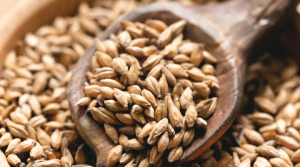
Beer is not wine. Nor is it a spirit. It stands firmly in a category of its own—a blend of water, malt, hops and yeast, brought to life by human skill. Because those four ingredients alone aren’t enough. It’s the brewer—armed with knowledge, experience and a fair bit of stubbornness—who turns them into something worth drinking.
That it quenches thirst is obvious. That it gives pleasure, too. But its place at the table? That’s where it still doesn’t always get the recognition it deserves. Beer has acidity, sweetness, bitterness. It has depth, texture, finesse. It can complement, contrast, even surprise. And yet, for many, it still amounts to “just another pint”.
And yes, Belgian beer has earned its place on the world stage. The bigger names paved the way. Abbey beers such as Leffe, Grimbergen and Affligem brought speciality beer to a wider audience. The 1990s saw a revival of geuze, the rise of microbreweries, and brewers like Cantillon and De Struise Brouwers gaining international acclaim. The internet did the rest.
But alongside that success, something else crept in: marketing. A true brewer lets the beer speak for itself—full stop. A marketer, on the other hand, starts with a story, sometimes before the beer is even finished. That may seem a small thing, but it marks a real shift. Brewing is about control. About patience. Knowing when to wait, and when to act. You can’t rush perfection. That doesn’t
sit easily in a world where a new beer is expected every month. After the IPA wave came the rise of sour beers. And now the alcohol-free trend is gathering pace. Interesting? Absolutely. But let’s be honest—not everything that’s fashionable is worth drinking.
Thankfully, competitions like the Brussels Beer Challenge show that the foundations remain strong. Belgian styles—saison, Flemish red-brown, lambic, oude geuze, oude kriek—are second nature to us. Benchmarks such as Westmalle Tripel show what real balance looks like. Innovation here still tends to grow out of tradition, and that’s precisely what sets us apart.
 Our beer culture is alive and well. In breweries. In cafés. At Den Engel on Antwerp’s Grote Markt, and just as much in a small village pub where thebeer list fits on a single sheet but still gets everything right. Where a Westmalle Tripel is served in the proper glass, even in the canteen of a lower-league football club. No fuss. No pretence. Beer, for us, isn’t about status. It’s a social glue. At the bar, a decorator chats with a solicitor—and they understand each other perfectly well.
And yet…Ask a Belgian about beer, and they’ll answer as though it’s their birthright—as if the knowledge came with their mother’s milk. And yes, we’re proud of that. Fair enough. But scratch the surface, and things quickly go quiet. We recognise the names, the glasses, the labels. We know what we like. But why? That’s where it starts to fall apart. Many couldn’t tell you the difference between a tripel and a strong blonde. A Speciale Belge? Barely known. How lambic is made? Anyone’s guess. The difference between Oud Vlaams Bruin and Vlaams Rood? Not so clear.
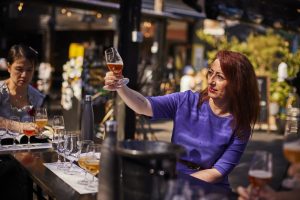 Do we really know the difference between flavour and aroma? Between yeast and character? Between tradition and marketing?Perhaps we know less than we think. And that’s not a problem—quite the opposite. It’s exactly why proper education still matters. Courses such as WSET Beer offer a clear framework, helping you to taste, analyse and truly understand what’s in your glass. Not to take the enjoyment away, but to deepen it. To taste more carefully. To choose more consciously. To enjoy more fully. Because the more you understand what’s in your glass, the richer the experience becomes. And there’s still plenty to discover. It’s also invaluable if you work with beer professionally. In a market that’s becoming ever more crowded and complex, knowledge makes the difference—not just for you, but for your customers too. It can genuinely elevate your business. A well-considered, balanced beer list isn’t a detail—it’s an asset. It tells a story, guides your guests, and enhances their experience. Because once you understand beer, you don’t simply pour a glass. You guide, you advise, you surprise.And that’s what separates decent service from something truly distinctive.